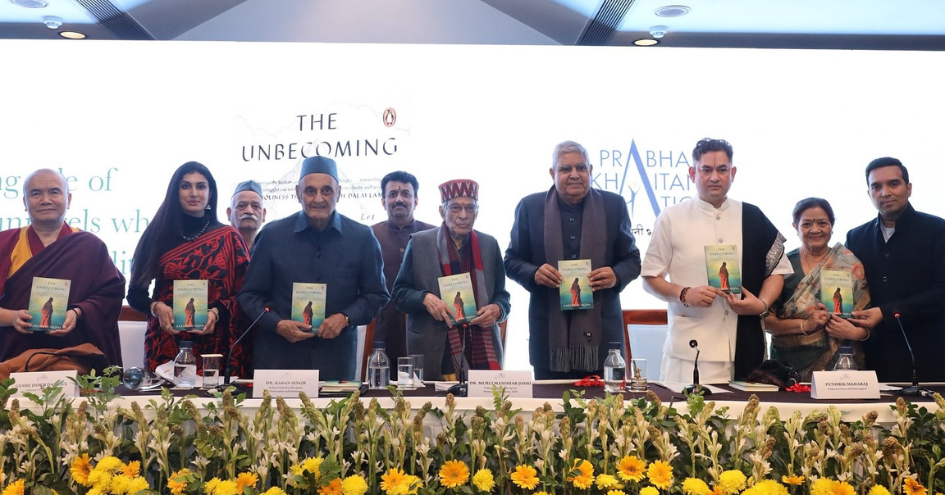
An evening of rich intellectual engagement and quiet introspection unfolded in New Delhi as The Unbecoming, the debut novel by Kartikeya Vajpai, was formally launched under the Kitaab initiative of the Prabha Khaitan Foundation. The event was marked not merely by the unveiling of a book, but by a profound dialogue on life, spirituality, and public responsibility.
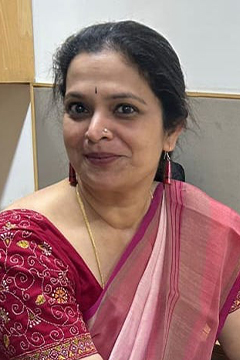
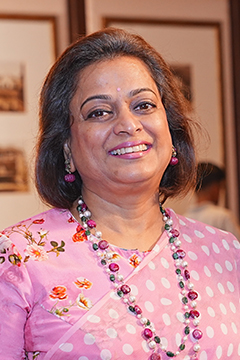
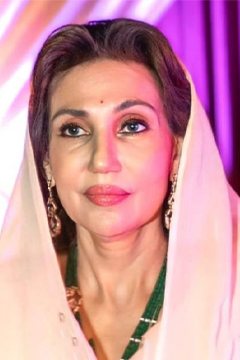
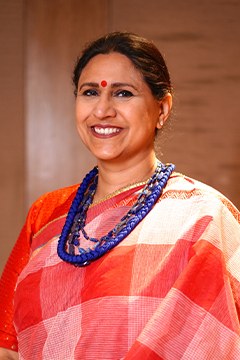
The book was formally unveiled in an atmosphere of distinction and intellectual gravitas, in the august presence of the Hon’ble Former Vice-President of India, Shri Jagdeep Dhankhar, alongside an illustrious panel of Guests of Honour, Padma Vibhushan Dr. Karan Singh, Padma Vibhushan Dr. Murli Manohar Joshi, Geshe Dorji Damdul, and Pundrik Maharaj. The occasion was further enriched by the presence of the author Kartikeya Vajpai, Abha Vajpai, and the moderator Shinjini Kulkarni, Ehsaas Woman of Noida.
The session was most memorably articulated through the address of Padma Vibhushan Dr. Karan Singh, one of India’s foremost philosophers, statesmen, and thinkers. Speaking with characteristic candour and erudition, Dr. Singh reflected on his personal experience of reading the novel, remarking on the rarity of the occasion itself. “After many years, I read a novel. Bada anand aaya. Enjoyed it greatly,” he said. What drew him most powerfully to The Unbecoming, he explained, was its engagement with a question that has defined his own life’s journey: “How do you combine a public life with a spiritual life?”
Dr. Singh observed that this question has followed him since the age of eighteen, when he entered public life, an engagement that has now spanned over seventy-five years. “For all these years, I was constantly asked this question, how is it possible to combine the two? Well, let me tell you, it is possible,” he asserted, offering both reassurance and wisdom. He emphasised that such a synthesis demands a “deep enough commitment, both to your outer life and to your inner life,” cautioning against the artificial division of the two. In one of the most resonant moments of his address, he stated, “Without a spiritual life, life becomes meaningless.”
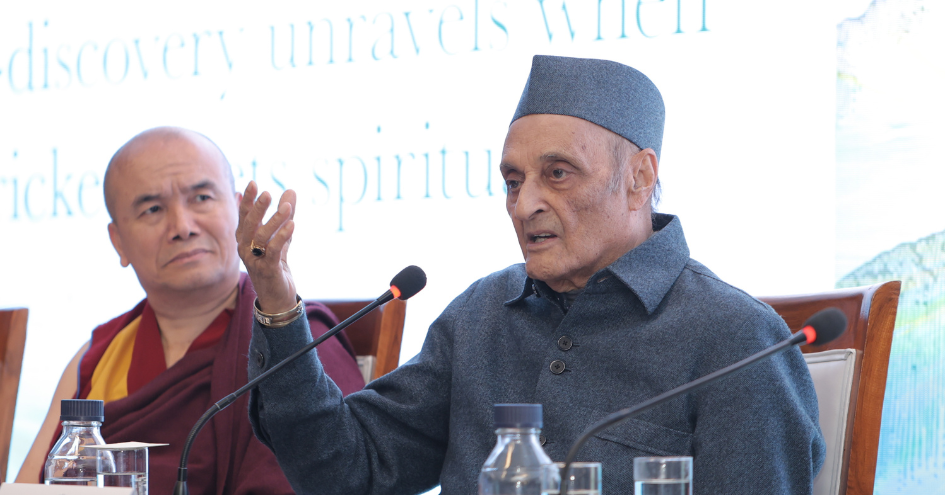
Drawing from his own lived experience, Dr. Singh recalled his long-standing engagement with the Upanishads, the Vedas, and the Bhagavad Gita – even during his years in the Union Cabinet. Recounting an anecdote with gentle humour and conviction, he said, “People said to me, ab to aap cabinet mein aa gaye ho, ab aap Gita pe kaise bhashan karoge? Maine kaha, kyun nahi? Main raj chhod ke aaya hoon, dharm chhod ke thodi aaya hoon.” The remark drew appreciative responses from the audience, underscoring his belief that political responsibility need not come at the cost of spiritual inquiry.
It was within this philosophical framework that Dr. Singh located the strength of Kartikeya Vajpai’s novel. He praised the author for weaving together the outer dimensions of life; sport, ambition, and public identity with the inner journey of sadhana and self-discovery. “Not only the outer dimensions of the spiritual quest, but the inner sadhana, that is what is really, Kartikeya has combined in a very effective manner,” he observed.
Dr. Singh noted, with literary insight, that every first novel inevitably contains the author within it. “Every first novel contains the author. I have written one novel, and I am also in that novel; not under my own name but under somebody else’s name,” he remarked, before adding that Kartikeya, too, is present within his narrative, albeit through another identity. He described how the novel takes readers through the world of cricket and onward to Dharamshala, culminating in what he termed “some excellent dialogue between Siddharth and the guru.” These dialogues, he suggested, form the philosophical spine of the novel; quietly probing, yet deeply evocative.
In a thoughtful aside that enriched the intellectual texture of his speech, Dr. Singh also reflected on Vedantic traditions. Clarifying that Advaita Vedanta is not the sole school of thought, he shared his personal inclination towards Dvaita Vedanta. “I worship Shiva. If I become Shiva, how do I worship Him? I have no desire to become Shiva,” he explained, illustrating the plurality and depth of Indian philosophical traditions. He reiterated the primacy of the Upanishads, stating unequivocally, “Upanishad mein hi hai gyaan hamara jitna gyaan hamara nihit hai Upanishadon mein hai.”
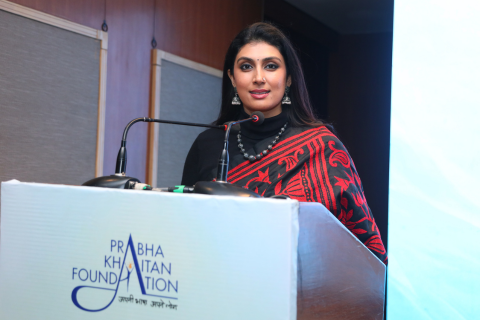
The moderator, Kulkarni, guided the conversation with poise, humility, and intellectual curiosity. Drawing attention to The Unbecoming, she highlighted its engagement with identity, self-discovery, and the shedding of labels in an age marked by social media anxieties, trolling, and cancel culture, inviting Dr. Joshi to reflect on personal evolution beyond conventional education.
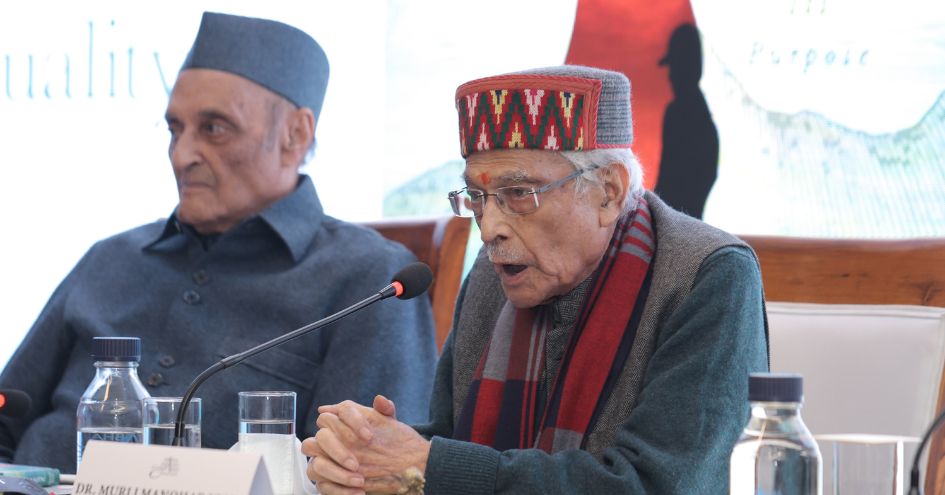
In a deeply reflective and intellectually expansive address, Padma Vibhushan Dr. Murli Manohar Joshi offered a philosophical reading of The Unbecoming, situating the novel within the long and luminous continuum of Indian thought. Speaking with scholarly gravitas and disarming clarity, Dr. Joshi began by invoking the Vedantic understanding of oneness, noting that the essence of reality is not multiplicity but unity.
Turning to the book itself, Dr. Joshi dwelt at length on the significance of its title. He described The Unbecoming as a profoundly evocative and mysterious choice, remarking that the movement “from becoming to unbecoming” addresses a paradox that even modern science continues to grapple with. With gentle wit, he observed that while the book’s launch represented an act of “becoming,” the true challenge lay in understanding and experiencing its “unbecoming.”
Dr. Joshi praised the author for undertaking an ambitious intellectual task, explaining a complex philosophical principle through a language that is accessible, contemporary, and rooted in lived experience. In an era marked by confusion between theory and practice, and by relentless questioning of purpose and identity, The Unbecoming, he observed, offers clarity without sermonising.
Central to Dr. Joshi’s analysis was the novel’s use of cricket as a metaphor for life and sadhana. He interpreted the narrative through the lens of the Bhagavad Gita’s dictum, “Yogah karmasu kaushalam” excellence in action is yoga. According to him, the book illustrates that true yoga does not demand withdrawal from action; rather, it requires performing one’s duties with skill, attention, and complete concentration. However, he emphasised that proficiency alone is insufficient. Without focus and inner stillness, even the most skilful action remains incomplete.
Through the journey of a cricketer, who rises, falters, succumbs briefly to ego, and is tested again the novel, Dr. Joshi noted, delivers a crucial spiritual lesson: action must be free of ego. He explained that once ego enters the process, sadhana, whether spiritual practice or disciplined sport, loses its sanctity. In this context, unbecoming signifies the shedding of ahamkar, the quiet emptying of the self.
Dr. Joshi drew illuminating parallels with India’s spiritual heritage, referencing the Upanishads, the Mahabharata, and the teachings of Guru Nanak. He underscored how great philosophies have always been communicated through simplicity, condensing vast truths into aphorisms that ordinary people can grasp and live by. In his view, The Unbecoming follows this very tradition: translating profound ideas into a contemporary idiom without diluting their depth.
Geshe Dorji Damdul offered a deeply reflective interpretation of The Unbecoming, situating the novel within a universal inquiry into consciousness, identity, and the flow of human existence. He began by recalling his early conversations with the author, Kartikeya Vajpai, noting that the title The Unbecoming initially struck him as “extremely catchy,” yet intriguingly enigmatic. He explained that “unbecoming” invites reflection on the idea that, in the process of growth and success, human beings often move away from their original nature and must consciously return to it.
Elaborating on this idea, Geshe Dorji connected the theme of unbecoming to modern scientific inquiry. He traced human existence back through evolutionary history, from Homo sapiens several million years ago, to the emergence of unicellular life in primordial waters billions of years earlier. According to him, unbecoming is the process of returning to that original state of clarity and balance, before complexity, ego, and disturbance entered the human condition.
Using a vivid metaphor, Geshe Dorji likened the human mind to ferocious ocean waves, turbulent, restless, and opaque. “Only when the waves subside,” he reflected, “does the water regain its clarity.” In disturbed states, clarity disappears; in stillness, truth becomes visible. This, he noted, lies at the heart of the book’s philosophical message: a call to return to the source where everything is inherently complete and harmonious.
Pundrik Maharaj offered a spiritual interpretation of The Unbecoming, elevating the novel from a work of fiction to an experiential philosophy. Speaking with rare eloquence and metaphysical depth, he described the book not as something that was merely written, but as something that was manifested. “Everything already exists in creation,” he observed, invoking the sculptor’s vision that every stone already contains the form within, it only awaits revelation.
Drawing richly from Vedantic, Vaishnav, and Bhakti traditions, Pundrik Maharaj offered an evocative metaphor that became the spiritual centrepiece of his address: the journey of the Ganga. From its origins in the lofty Himalayan peaks, the river gathers memories, minerals, lives, and histories as it flows through India, nurturing civilization, faith, and culture. Yet, he explained, the most profound moment comes when the Ganga reaches the ocean. In that final leap, its individual identity dissolves, not into nothingness, but into completeness. “Unbecoming is not becoming zero; unbecoming is becoming whole,” he declared. What was once “something” becomes “everything.”
This metaphor, he suggested, captures the true meaning of The Unbecoming. Human beings live within boundaries, social, emotional, karmic, much like a river flowing between banks. The ocean, however, is limitless. When the river merges into the sea, it loses its constraints but gains infinity. This, Maharaj explained, is the Vedantic state of unbecoming: the dissolution of limitation, not of existence.
In a reflective and deeply personal moment during the discussion, author Kartikeya Vajpai articulated the inner inquiry that forms the philosophical core of The Unbecoming. He spoke candidly about his prolonged questioning of the elusive “state of flow”, a condition of heightened awareness and effortless action that often arrives unexpectedly.
This resistance to uncertainty, Vajpai suggested, is what prevents individuals from truly inhabiting the present. To embrace the moment as it is without attempting to control or anticipate it demands faith and courage. It requires a willingness to let go of the comfort of the known and to trust the unfolding of experience.
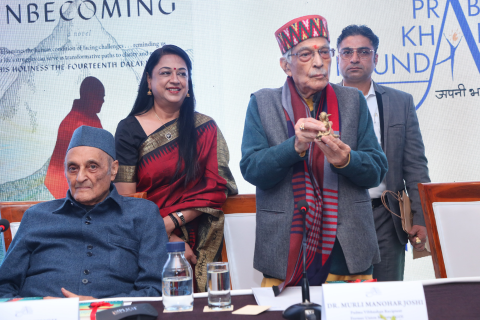
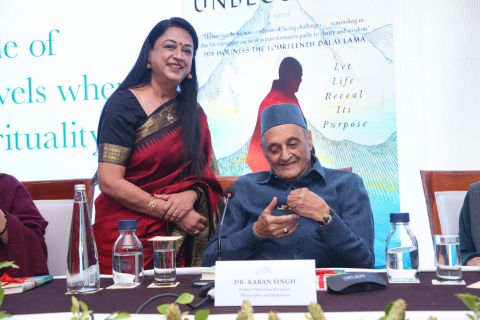
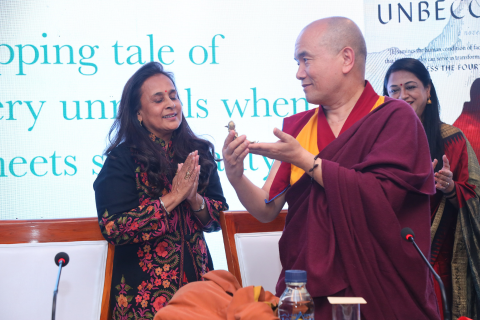
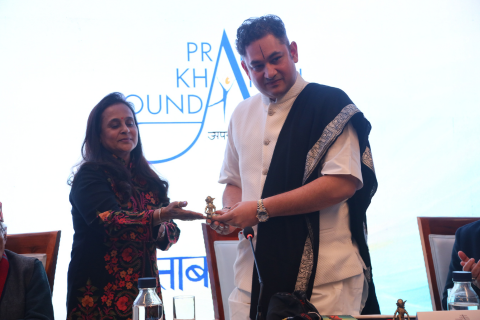
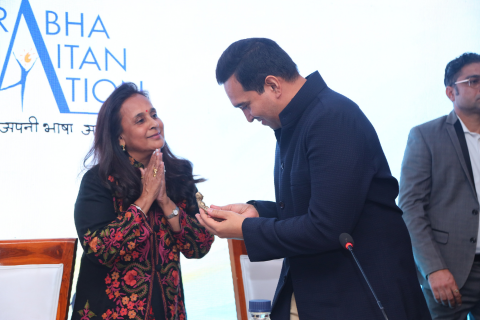
The distinguished Guests of Honour and the author were felicitated with finely crafted Dhokra handicrafts, presented by the Ehsaas Women of Delhi. Charu Chauhan, Ehsaas Woman of Delhi conferred the honours upon Dr. Karan Singh and Dr. Murli Manohar Joshi, while Anantmala Potdar, Ehsaas Women of Delhi felicitated Geshe Dorji Damdul, Pundrik Maharaj, and Kartikeya Vajpai, bringing the formal proceedings to a dignified and graceful culmination.
This session of Kitaab was organized in association with Penguin Books.