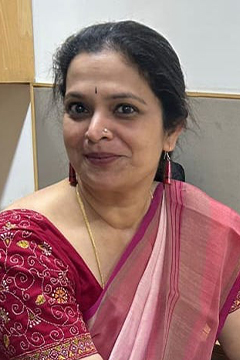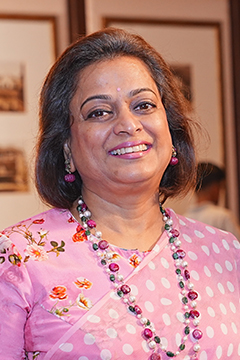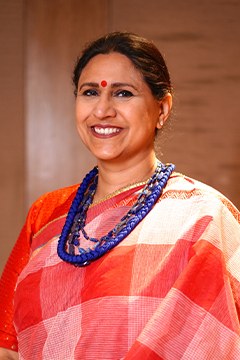
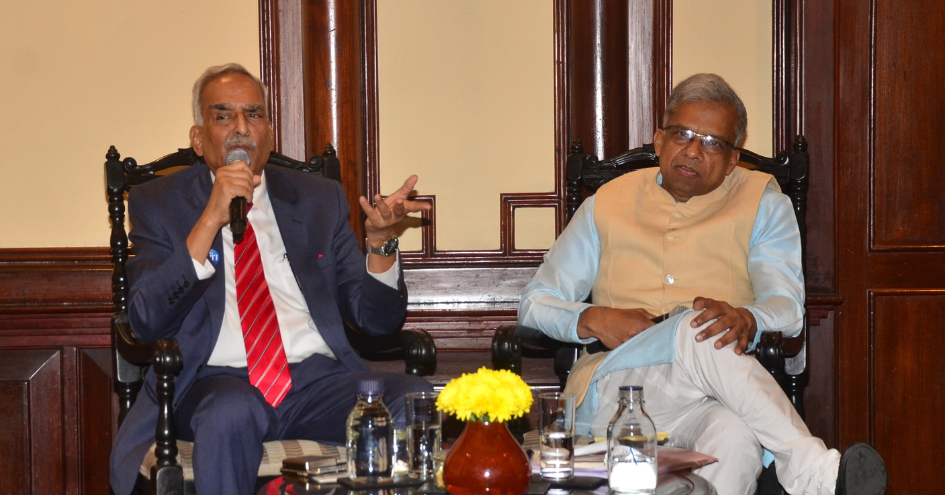
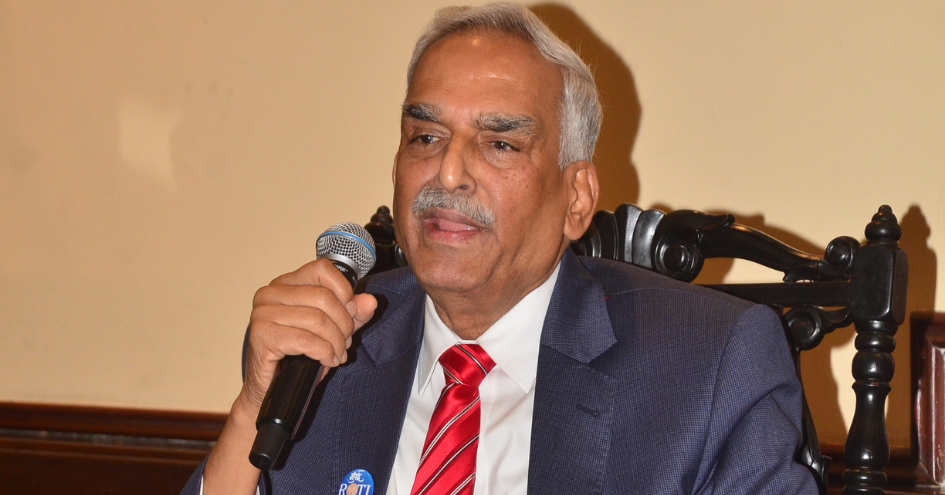
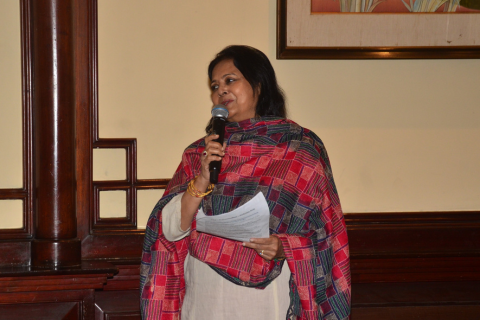
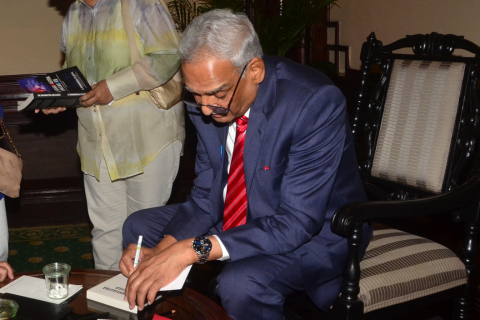
An evening marked by intellectual vigour and reflective discourse unfolded during An Author’s Afternoon, where author and former Director General of Police D. Sivanandhan engaged in a compelling conversation with entrepreneur Manoj Mohanka. The session commenced with gracious opening remarks by Gouri Basu, Ehsaas Woman of Kolkata, whose eloquence set an appropriately warm and dignified tone for the evening.
As the discussion progressed, the conversation turned toward one of the most formidable figures of India’s criminal underworld, Dawood Ibrahim. Sivanandhan, drawing upon decades of policing experience, offered a meticulous account of the criminal’s rise to power. Reflecting on the period surrounding The Emergency in India, he remarked with analytical candour: “time Dawood Ibrahim consolidated his position right so the emergency in many ways worked antithetical to the purpose that was set out.” The statement, though conversational in tone, revealed a sharp observation that a political episode intended to impose discipline upon the nation had, paradoxically, strengthened certain clandestine networks.
He continued by noting that from this point forward Ibrahim began experimenting with methods that were novel within the underworld hierarchy. “Then and from then on he began to follow what is called uh now known as a disruptive technology,” Sivanandhan observed. Elaborating further, he remarked, “he started doing things which were not previously done moving into other people’s territory etc etc.” The phrasing borrowed almost from the lexicon of modern innovation was striking. It conveyed how the underworld had begun to adopt strategic adaptability reminiscent of corporate disruption, albeit in a far darker domain.
The former police chief also recalled the moment that marked Ibrahim’s physical departure from India, a moment that would profoundly shape his later global operations. “In 1984 he left India and has not appeared on our soil since.”
The conversation then moved towards the early structure of Mumbai’s underworld. Sivanandhan described a surprisingly cooperative environment in its formative stages. “There was a very peaceful coexistence of the guys,” he explained. Figures such as Rajan Nair cultivated a curious reputation as local benefactors. As Sivanandhan vividly recounted, “Rajan madly used to be the Robin Hood by bringing that Ganpati pandal.”
The reference to the public celebrations of Ganesh Chaturthi illuminated how criminal leaders often fashioned themselves as patrons of community culture. The same strategy, he noted, was later adopted by Varadarajan Mudaliar in Chembur through the Sahyadri Mandal. “He spent three crores of rupees to be the Robin Hood and do good to the people,” Sivanandhan remarked, his words hinting at the calculated theatrics behind such philanthropy.
To illustrate the brutality of those years, he narrated the chilling story of a financier named Satish Raji. The man, convinced that technological protection would guarantee his safety, travelled in a vehicle fitted with bulletproof glass. But the criminals devised a brutally simple tactic. “When he was waiting for the signal with two hammers, they hammered the glass in one second. The poor fellow didn’t ever believe that this bulletproof glass would save him against a bullet, but not against a hammer.” Moments later, the attackers fired multiple shots and escaped with calculated efficiency.
Turning back to Ibrahim’s early years, Sivanandhan explained that the gangster had entered the criminal world at a remarkably young age. “The guy was born in 1955 and in 1975 he would have been about 20 years old but he began at 14.” Yet the large-scale bloodshed associated with the underworld did not fully erupt until later. “The blooding started only in 1983-84,” he noted, referencing escalating rivalries involving figures such as Samad Khan.
The narrative then broadened to include the international dimensions of organised crime. One accused, identified as Alangir, fled to Dubai after obtaining bail. There he prospered through smuggling networks. “The profit of sending gold and electronic goods is huge,” Sivanandhan explained, adding that the man constructed an opulent residence known as the White House and ran a lavish hotel with international staff.
One of the most arresting moments of the evening came when Sivanandhan reflected upon the catastrophic events surrounding the 1993 Mumbai bomb blasts. In an unembellished yet compelling narrative, he remarked: “The biggest catastrophe ever in the world that is organized by the mafia, a bomb blast, a terrorist attack took place where 257 Mumbai lost their lives. 857 were injured. 900 were missing. Hundreds of crores worth of property went up in smoke.”
Finally, the discussion approached a sombre historical turning point. With a measured tone, Sivanandhan declared: “The main catastrophic event for the whole country took place on 12th March 1993.” The attacks followed the demolition of the Babri Masjid on 6 December 1992 and the communal violence that ensued. In the aftermath, some members of the minority community reportedly approached Ibrahim in Dubai with a grim request. As Sivanandhan recounted, they told him to “do some equalizer business whatever it is whatever it meant.”
Perhaps the most evocative segment of the evening emerged when Sivanandhan reflected on leadership and personal courage during a Q&A session. Explaining why he often walked publicly without heavy security despite serious threats, he offered a striking rationale: “If I go with Z-category security, what kind of confidence message do I give to the people? How can a businessman believe that I will protect him if I cannot walk without protecting myself?”
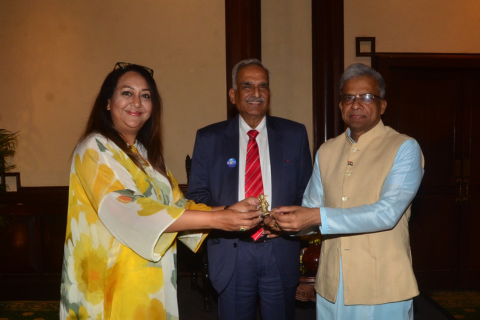
Gouri Basu, Ehsaas Woman of Kolkata would later return to the stage to deliver a heartfelt vote of thanks. The event also featured a moment of ceremonial appreciation when Janet Gasper Chowdhury felicitated both the author and the conversationalist with exquisite Dokra artefacts.
This session of An Author’s Afternoon was organized in association with Hospitality Partner, Taj Bengal.