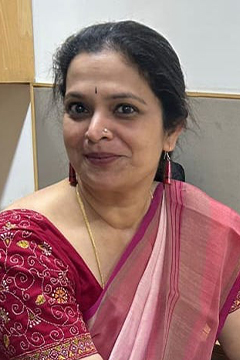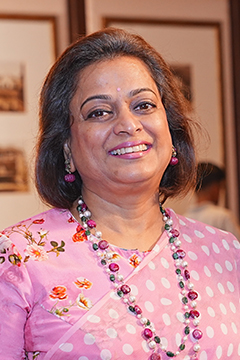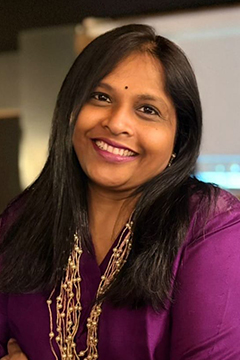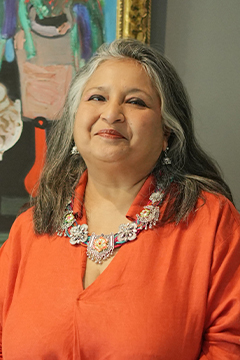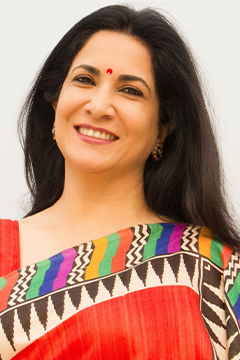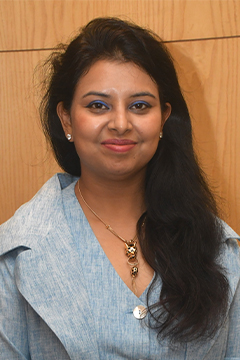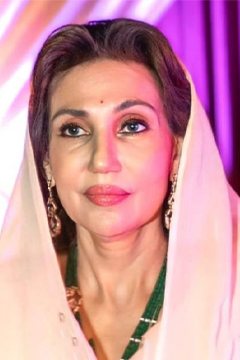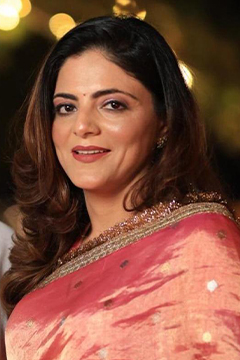
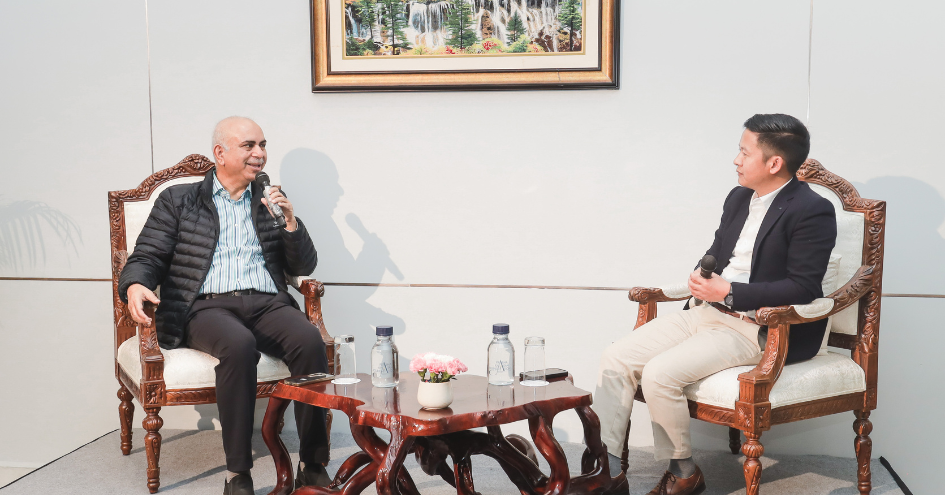
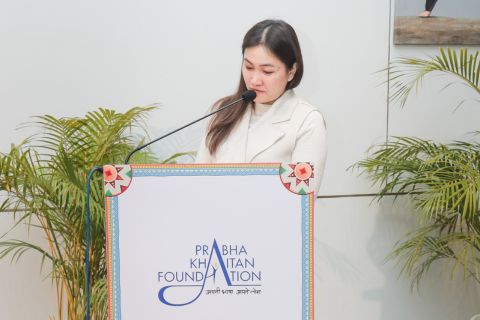
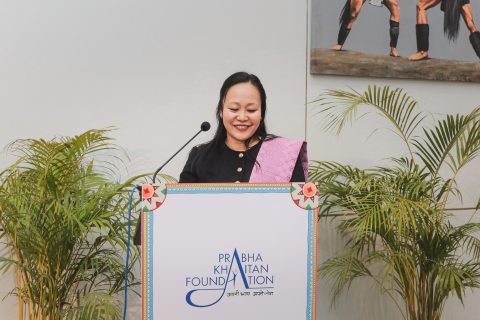
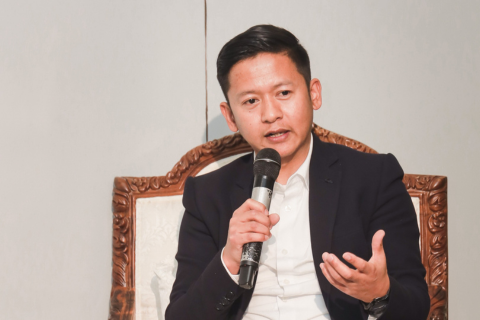
An enriching evening of thought, dialogue, and reflective inquiry unfolded at The Write Circle session in Dimapur, organised by the Prabha Khaitan Foundation. The session featured noted author and journalist Rasheed Kidwai in conversation with media personality and political commentator R Lungleng. The evening commenced with a warm welcome by Abokali Jimomi, Ehsaas Woman of Dimapur.
The conversation opened on a reflective note as Kidwai spoke about the shaping of Indian states and the long-term consequences of political design. Drawing from recent travels, he added, “I was there in Mizoram last week. I realised that actually there should have been greater attention to creation in keeping with the linguistic, cultural, and economic aspirations of the people.”
Turning to contemporary politics, observed a significant transformation in democratic practice: “We are supposed to be a parliamentary democracy where Members of Parliament (MPs) elect a Prime Minister, but now we have a situation where the Prime Minister elects MPs.” He continued, “This is a negation of what democratic principles stand for. Indian democracy is working very well; it is vibrant.”
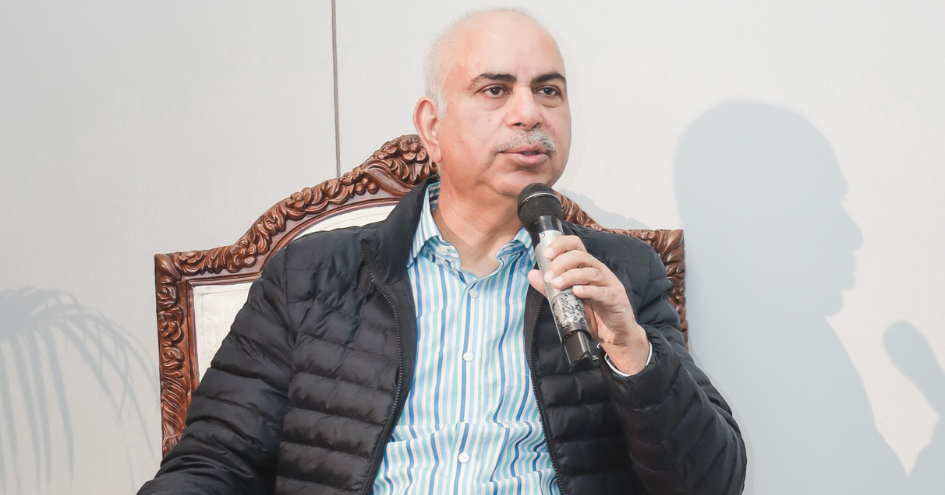
Drawing parallels with global politics, Kidwai reflected, “You were quoting Thomas Jefferson. Once upon a time Jefferson was President of the United States. Now you have Donald Trump, and the principles of Jefferson are not in practice.” He contextualised this within India’s political shifts, explaining that the success of the ruling party lay in combining “cultural nationalism, muscular nationalism, the issue of identity, and majoritarianism.”
On the weakening of the opposition, he remarked with clarity, “The strength of Congress was the absence of ideology. It was like a railway platform where everyone could come on board.” But this strength, he argued, had turned into vulnerability: “Its strength has become its weakness. The BJP’s weakness has become its strength.”
Kidwai’s analysis of electoral arithmetic was strikingly precise. “Mr. Modi’s popularity has never been less than 54 per cent,” he noted, while adding, “The BJP’s vote share has never been more than 38 per cent. This contradiction was resolved by the electoral system: We have a first-past-the-post system.”
On dynastic politics, Kidwai challenged conventional assumptions. “If you remove the dynasty, women’s participation in Indian politics would fall to two or three per cent,” he said, adding, “Nothing is simple in India.” While acknowledging that the dynasty contradicted democratic ideals, he maintained, “Are we questioning the wisdom of the voters who elect them?”
Reflecting on journalism, Kidwai spoke with professional introspection: “Media is a mirror of society.” He added, “The media actually perpetuates the existing belief system.” In a remark that drew quiet nods from the audience, he said, “From an ethical point of view, both pro-government and anti-government conduct is questionable.”
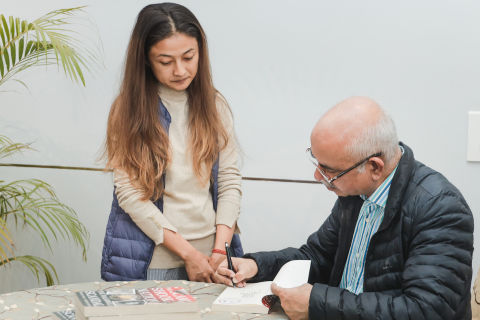
The evening culminated in discussion of Kidwai’s latest work on the Nagarwala scandal. Summarising its theme, he said, “It is very tempting to reach conclusions, but if something remains inconclusive, we must admit it remains inconclusive.” He emphasised that the book was not merely about a crime but “a commentary on our political system.”
The session wrapped with a Q&A session with the audience which was marked by moments of humour, candour, and philosophical pause, lending the evening both intellectual rigour and human warmth. As the evening concluded with closing remarks by Viketuno Rio, Ehsaas Woman of Dimapur and the ceremonial felicitation with hand-crafted terracotta artefacts by Subhadeep Chatterjee, the atmosphere carried a sense of thoughtful completion.
This session of The Write Circle was organized with the support of Ehsaas Women of Dimapur, in association with Oil India Limited; Hospitality Partner, Zone Niathu Dimapur by The Park.