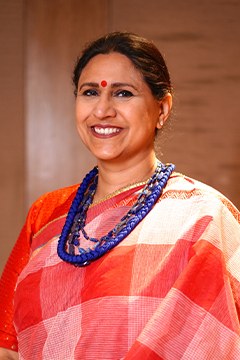
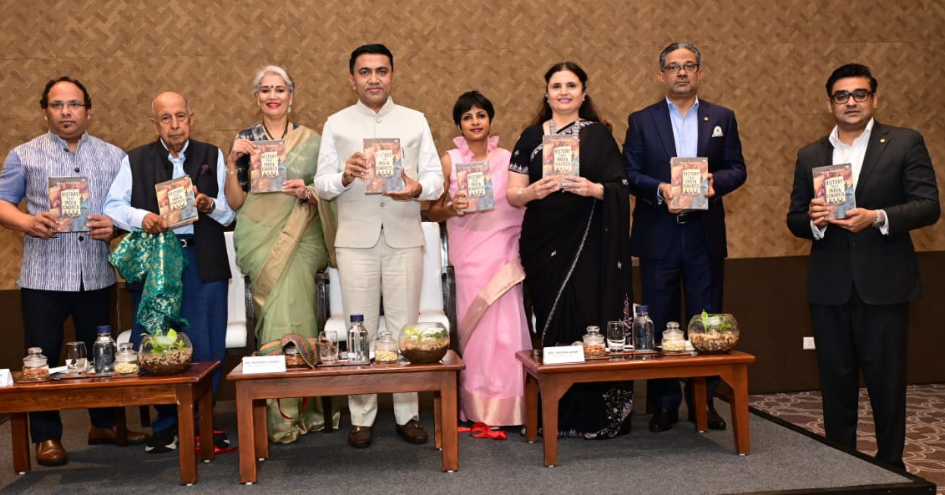
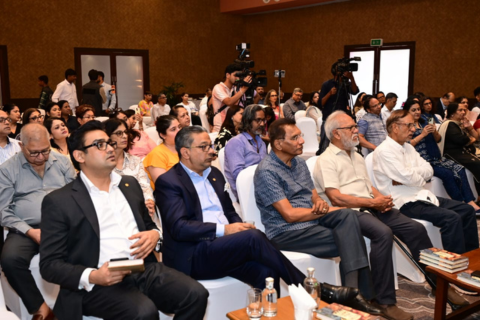
In a compelling celebration of history, memory, and intellectual courage, Kitaab session organised by Prabha Khaitan Foundation in Goa witnessed the formal launch of History That India Ignored by eminent journalist and author Prem Prakash. The evening brought together distinguished dignitaries, literary enthusiasts for a discussion that was as thought-provoking as it was timely.
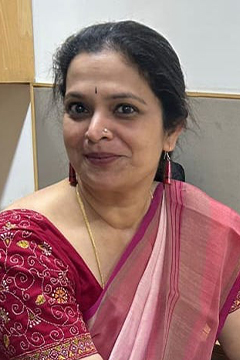
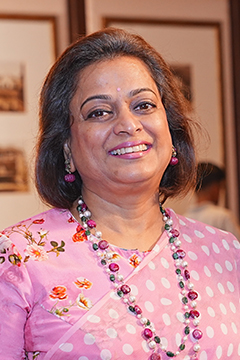
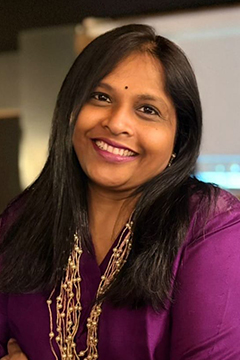
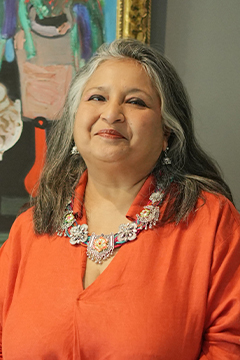
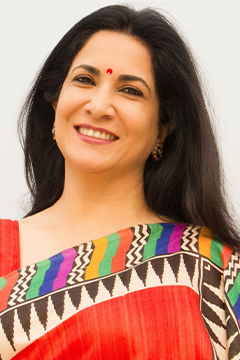
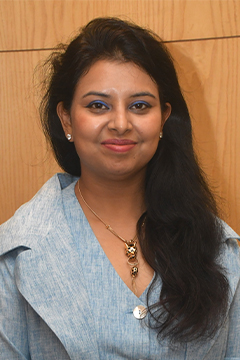
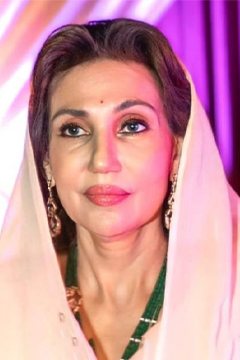
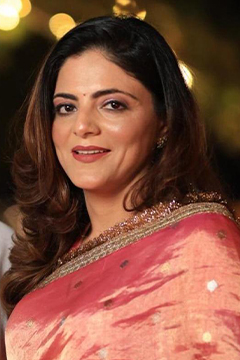
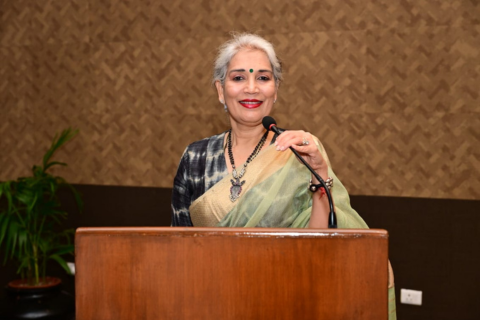
Adding to the ceremonial significance, the book was jointly unveiled by Chief Minister Pramod Sawant; author Prem Prakash; Ranjith Phillipose, Senior Vice President, IHCL- Taj Hotels; Vivek Batra, Group Cluster Manager, Taj Cidade; along with the Ehsaas Women of Goa. The session commenced with a gracious welcome address by Gaurapriya Pai Kane, Ehsaas Woman of Goa, who set the tone for an evening dedicated to reflection and rediscovery.
In his address, the Chief Minister described the occasion as “not just the release of a book,” but “a reaffirmation of the national responsibility to remember, to recognize and to restore our collective memories of those chapters of history that were either neglected or deliberately misrepresented.” Calling it “a proud moment” to inaugurate the author’s second book in Goa, he emphasized that “releasing such a book is not merely a literary event; it is an act of national service.”
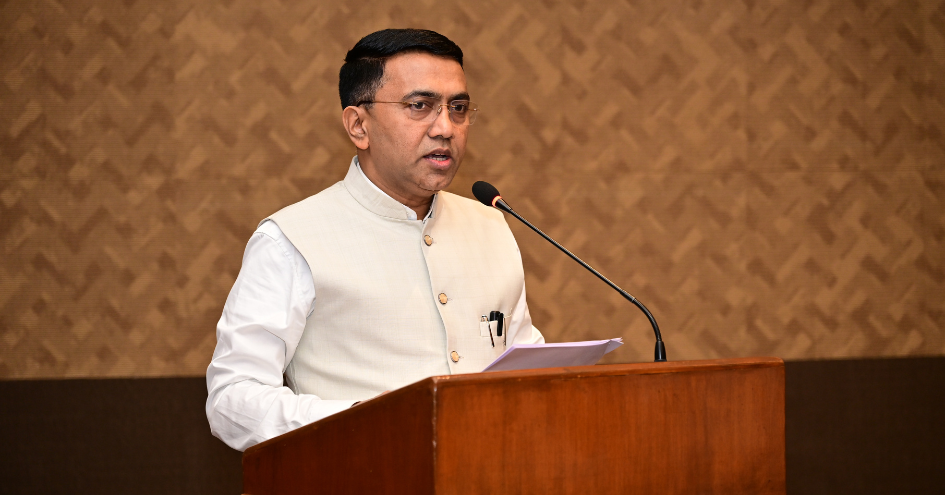
Praising the author’s meticulous scholarship, he noted that the book “stands out for its commitment to evidence, documentation and intellectual honesty.” He particularly highlighted the chapters on Vinayak Damodar Savarkar, the INA’s Battle of Imphal, and Goa’s liberation struggle, observing that “if we do not record our own stories, others will interpret them for us; often incorrectly.” Concluding his remarks, the Chief Minister affirmed, “History That India Ignored is more than a book. It is a reminder, a correction and an inspiration.”
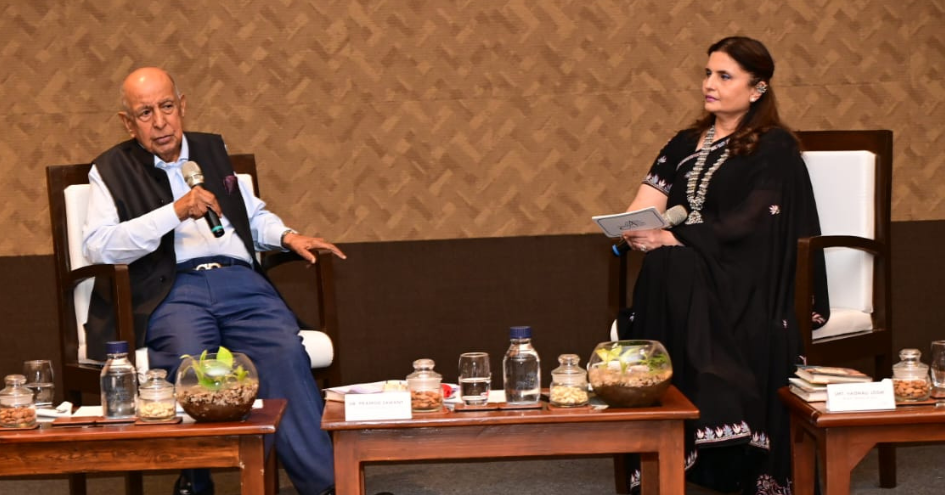
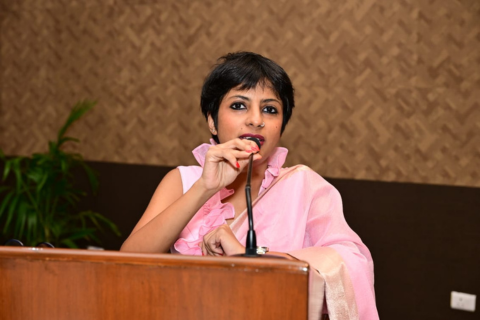
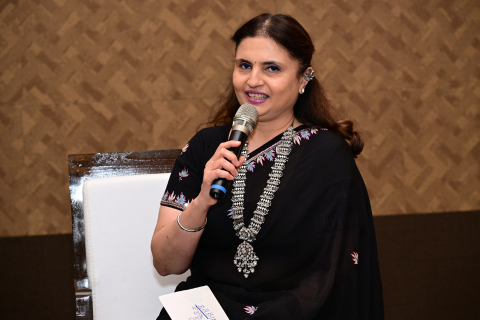
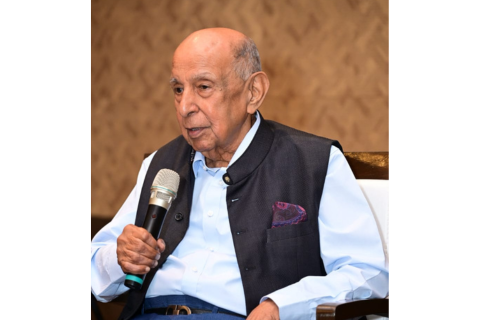
The session, warmly anchored by Vaishali Joshi, Ehsaas Woman of Goa in conversation with the author, unfolded into an engaging dialogue that invited the audience to rethink inherited narratives.
The author began by tracing the ideological turning point of the freedom movement. “It was only in December of 1930 that complete independence became the objective of the Congress,” he reminded the audience. Before that, he explained, the demand had largely been for dominion status. “Home rule would have meant we would even today have been a dominion with the British Crown as head of India. Would you have liked it?” he asked pointedly. For him, the shift from dominion status to complete independence was not merely political; it was moral and civilizational.
“This book is a tribute to all those people who fought and said very clearly that we are a great nation. We will have our own people to run the government. We do not need a head of state sitting in England.” In that assertion lay his larger argument: that the revolutionary stream of the freedom struggle had been systematically minimized in post-independence historiography.
Reflecting on when he first sensed that history had been “selectively silent,” he said, “Whoever you ask one simple question; who got us independence? the simple reply would be Gandhi, Congress.” He paused before adding, “Yes, they had a role to play. But the fact also is that post-independent India has not treated the revolutionaries properly.”
He cited the example of the Chittagong uprising. “Imagine, even before the Indian National Army, there was the Indian Republican Army which captured Chittagong,” he said. “It is reflected by the British as well as many historians since independence as the ‘Chittagong Armory Raid.’ There was no raid on Chittagong Armory. Chittagong was captured. They cut off all rail lines and communications, and then the armory fell into their hands. They never raided it.”
Asked to name one or two unsung heroes from the book, he declined to single anyone out. “It would be very difficult for me to single them out,” he said. “Each one; including a fifteen-year-old; sacrificed their lives.” He spoke of young women revolutionaries who embraced martyrdom. In one case, he recounted, “This young lady threw the bomb. Unfortunately it went into the wrong coach. The next moment she took cyanide and died there itself.”
“If the INA had won the Battle of Imphal, there would have been revolution in India itself,” he argued. “Because Americans had used two atom bombs by that time, there was no force behind it. It was the American Air Force which was helping the British fight the Indian National Army in Imphal.” He described how the British feared executing INA officers. “Even before the announcement of the judgment could be made public, the Commander-in-Chief released them. They were so afraid that if these three were hanged, there could be revolution in India.”
On the question of dominion status, he was unequivocal. “That was the total objective of the Indian National Congress and Mahatma Gandhi until 1930; home rule, dominion status.” He reminded the audience that after World War I, Britain had assured concessions in exchange for Indian support. “Not only was all the expenditure of the war debited to India, but afterwards they said India is not ready for it as yet.”
“Goa has made extreme sacrifices for independence. It is totally wrong to say that Goa didn’t fight,” he declared. He attributed the delay in Goa’s liberation partly to excessive reliance on negotiations. “Talks don’t take you anywhere. A revolutionary knows what he wants and he gets it.” He described fears that Goa might become a rest-and-recreation base for American forces, complicating its integration. His recollections of entering Goa during liberation were vivid; villagers planting small flags to mark mined roads, the absence of resistance, the surreal atmosphere of surrender.
He also devoted attention to Justice Radhabinod Pal. “After the war, MacArthur wanted a quick trial of Japanese leaders along the lines of Nuremberg,” he explained. “Justice Pal argued in a 1,300-page judgment that what happened in Japan was not comparable to what happened in Germany.” He pointed out that Pal remains the only judge honored with a statue at the Japanese war memorial. “That shows why our relations with Japan are so close.”
One story that deeply moved him during research was that of Nanak Singh. “He was not happy about partition. He went out to stop a riot and was killed there,” Prem Prakash recounted. “We don’t know how many millions left, how many hundreds of thousands were killed or wounded, how many women were kidnapped. No idea till today.” His voice, though steady, carried the weight of unresolved grief.
Throughout, he reiterated the purpose of his work. “All I have done is brought out this book to give tribute to these people,” he said. “It is not necessary that you should have a memorial only for a known person. These are all unknown people, young people, young women.” The evening closed not with certainty, but with contemplation.
In a heartfelt gesture of appreciation, Ranjith Phillipose felicitated the author, whereas Chief Minister Pramod Sawant was felicitated by Srinivas Dempo, marking a distinguished moment that reflected the collaborative spirit of the evening. The session concluded on a warm and gracious note with a vote of thanks delivered by Shruti Jaiswal Juwarkar, Ehsaas Woman of Goa.
This session of Kitaab was organized with the support of Ehsaas Women of Goa