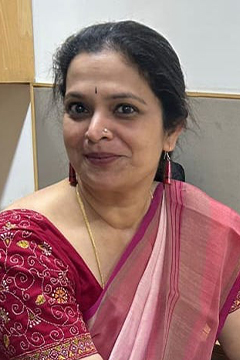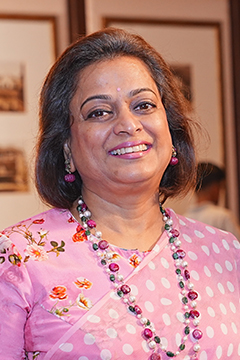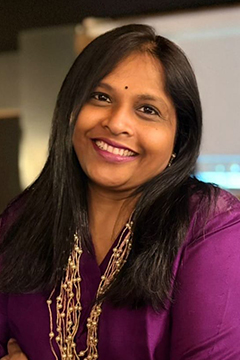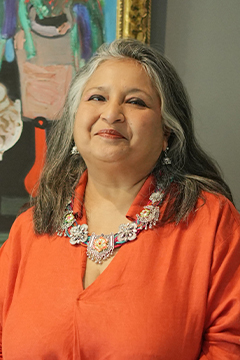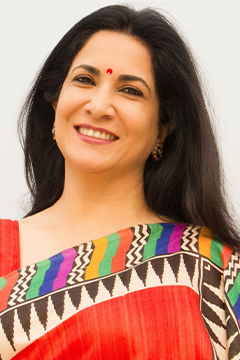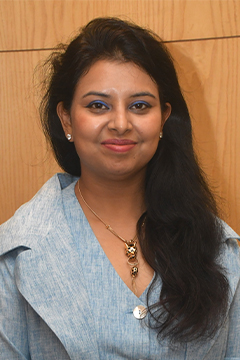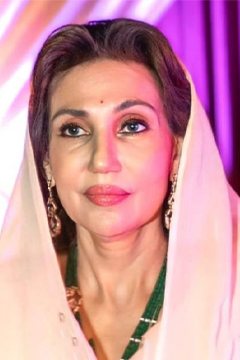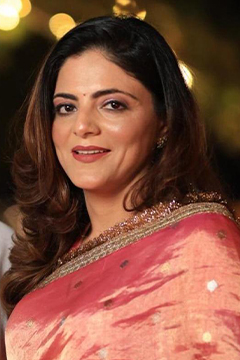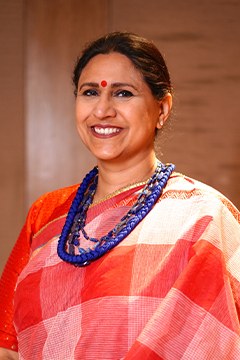
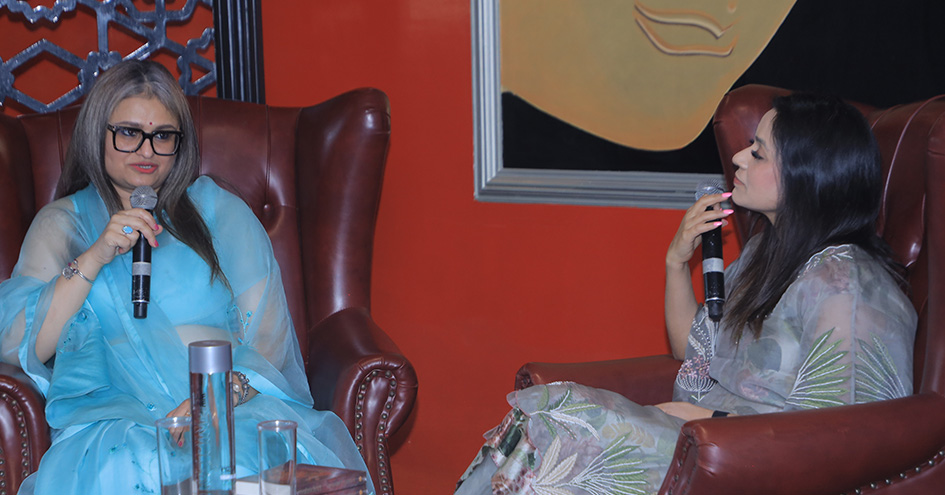
An evening of thoughtful reflection and engaging dialogue unfolded in Udaipur under The Write Circle, an initiative of the Prabha Khaitan Foundation. The session featured acclaimed author Priyanka Sharma Kaintura in conversation with Swati Agarwal, Ehsaas Woman of Udaipur, exploring mythology, feminine power, spirituality, and the relevance of ancient wisdom in contemporary life. The evening commenced with a welcome note by Shraddha Murdia, Ehsaas Woman of Udaipur.
From the outset, Kaintura spoke with candour about the responsibilities of a writer. “Editing the truth never worked for me,” she remarked, emphasising that authentic storytelling allows readers to discover parts of themselves within a narrative.
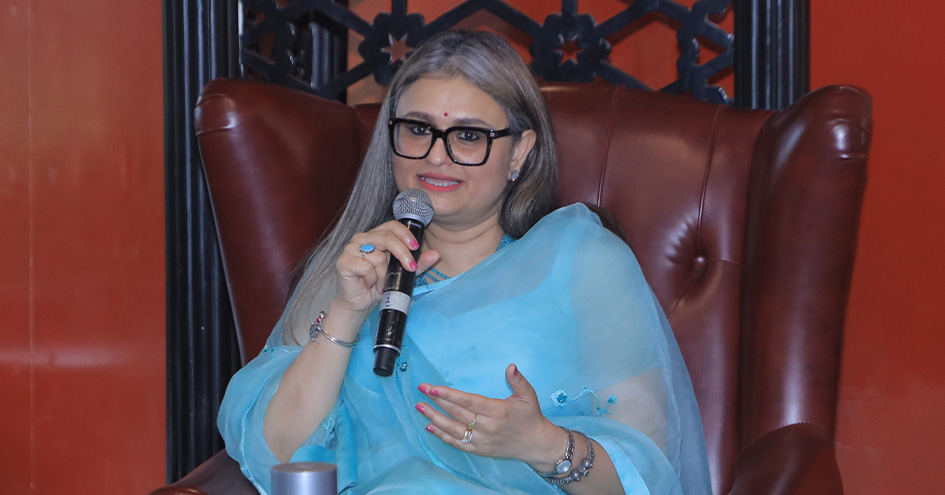
Discussing the inspiration behind her work, Kaintura shared how a simple question led her on a journey of research, travel, and discovery: Who is Devi beyond the familiar iconography of temples and rituals? “What we understand of Devi is not even the beginning of her,” she observed. “She is the basis of this whole universe.”
Drawing parallels between spirituality and science, she described Shakti as the primordial energy that sustains existence. Referring to the mythology of Mahishasura, she explained how feminine energy embodies both nurturing and transformative power. “The same river that nurtures can also become a flood,” she noted, highlighting the multidimensional nature of the feminine divine.
A recurring theme throughout the discussion was the disconnect between ritual and understanding. Kaintura argued that while traditions continue to be practised, their deeper philosophical significance is often overlooked. “We worship them, but we’re not really valuing them,” she reflected.
The conversation also examined ethics, mythology, and the complexities of human behaviour. Drawing examples from the Mahabharata, she noted that mythology rarely presents the world in absolutes. “The world exists in shades of grey,” she said, emphasising the nuanced lessons embedded within ancient narratives. She further distilled her research into what she called the “Three Es” — Energy, Emotions, and Ecology — underscoring the interconnectedness of humanity and nature.
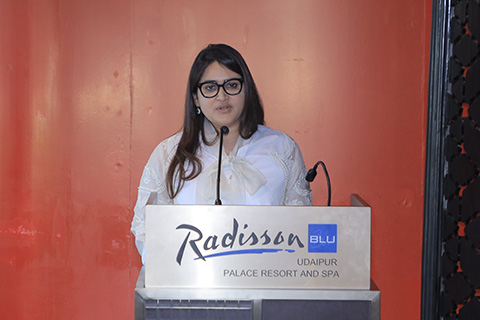
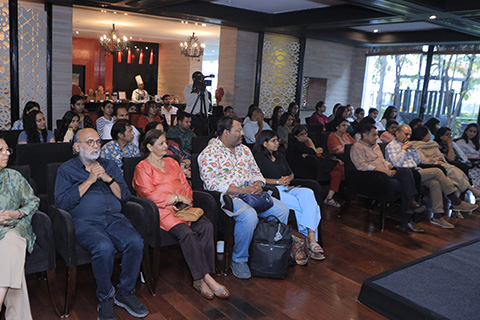
The audience interaction that followed explored themes ranging from feminism and cultural identity to ecological consciousness. Kaintura encouraged critical inquiry over unquestioning belief, stating, “Blind faith is not good. I would rather have somebody study and then choose what they want to believe.”
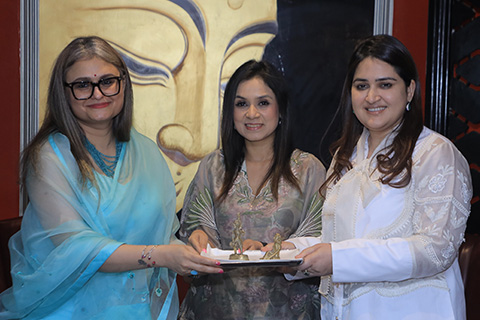
The evening concluded with a heartfelt vote of thanks by Ehsaas woman, Shraddha Murdia. The author was felicitated by Swati Agarwal and Shraddha Murdia in recognition of her literary contributions and efforts to reinterpret mythology for modern readers.
This session of The Write Circle was organized with the support of Ehsaas Women of Udaipur; Hospitality Partner, Radisson Blu Palace Resort & Spa