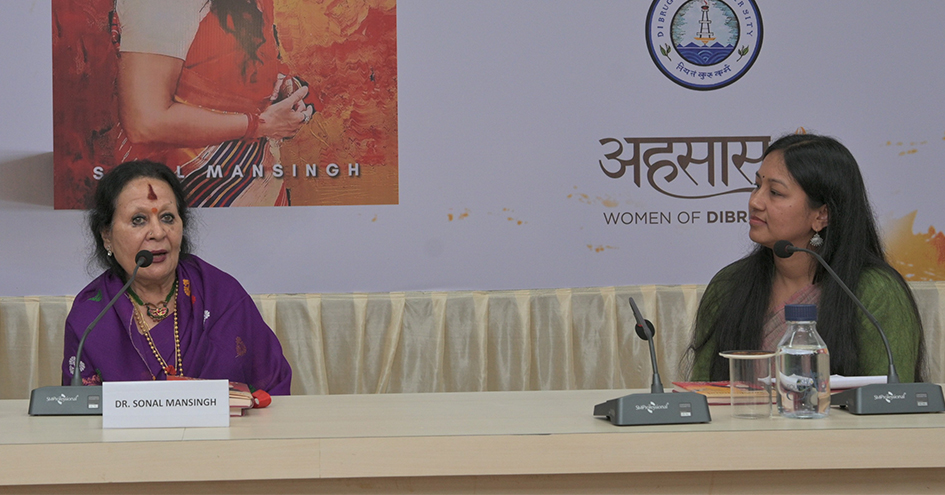
An evening of artistic wisdom, and cultural introspection came alive at Kitaab Dibrugarh as the launch of A ZigZag Mind for an illuminating conversation with renowned classical dancer, cultural icon, and author Sonal Mansingh. Organised under the aegis of the Prabha Khaitan Foundation, the event celebrated not merely the publication of a book, but the extraordinary journey of a woman whose life has traversed the realms of art, public service, philosophy, and cultural stewardship.
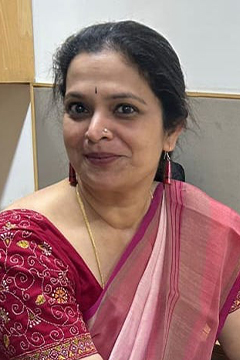
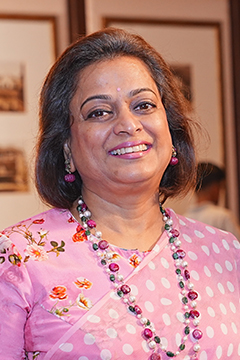
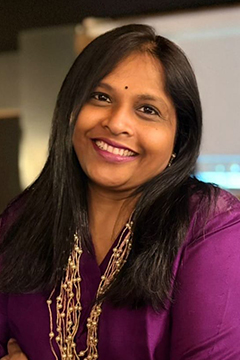
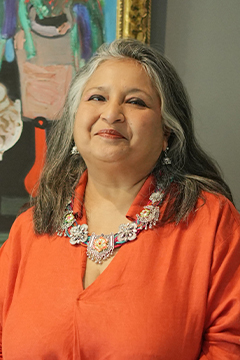
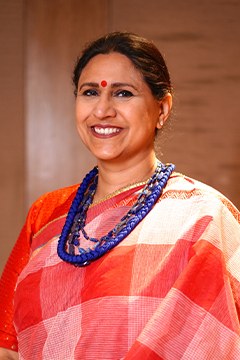
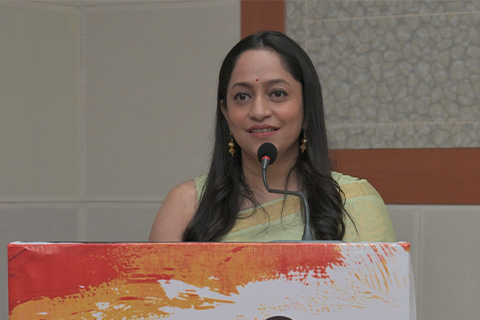
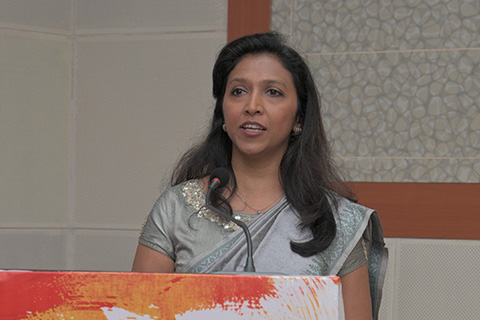
The programme commenced with a gracious welcome address by Preeti Bagrodia, Ehsaas Woman of Dibrugarh. Sonal Mansingh was in conversation with Lakhipriya Gogoi where the evening evolved into a compelling exploration of tradition, resilience, spirituality, creativity, and the enduring relevance of Indian cultural values in a rapidly changing world. The evening was further enriched by the presence of Chief Guest Prof. Jiten Hazarika and Guest of Honour Prof. Karabi Deka Hazarika.
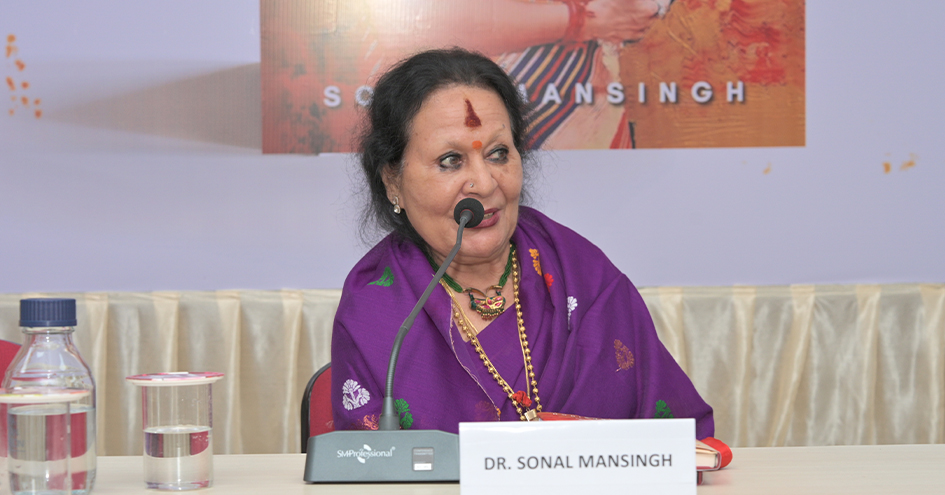
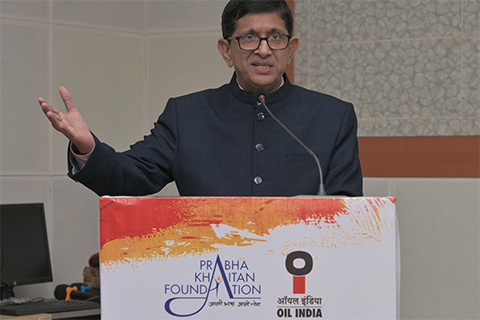
Prof. Jiten Hazarika delivered an engaging and reflective address. Reflecting on the book’s title, he noted, “creativity, reflection, and intellectual discovery seldom move in straight lines. The universities must remain spaces where minds are free to question, explore, challenge conventions, and create.” He praised Dr. Sonal Mansingh’s lifelong contribution to Indian arts and culture, describing her as a legendary artist whose work continually demonstrates that art is not merely an aesthetic pursuit but a profound means of understanding life itself.
Prof. Karabi Deka Hazarika delivered a thoughtful address describing the book as “a treasure and a memoir of immense value.” She highlighted several fascinating chapters that explore themes ranging from the guru-shishya tradition and creativity in dance to women’s empowerment, spirituality, and personal transformation. She observed, “A memoir is a personal narrative that focuses on a specific aspect or period of the author’s life, often exploring their experiences, emotions and reflections.”
Reflecting on the title itself, Dr. Mansingh remarked that life seldom follows a linear trajectory. “It has been a life of such experiences and, as the title suggests, zigzags. Imagine twenty-four hours a day, three hundred and sixty-five days a year, how many zigs and how many zags one must navigate. That journey continues until the very last breath,” she said.
She mentioned the significance of the guru-shishya parampara, which forms a cornerstone of Indian artistic traditions. Dr. Mansingh offered an understanding of the term parampara, saying it was often inadequately translated as “tradition.” “Parampara is not orthodoxy. It is not rigid. It is something rooted and yet constantly moving forward. When one foot advances, the other remains firmly grounded.”
She spoke movingly about her gurus and the transformative role they played in shaping her worldview. “A guru does not merely teach a skill. A guru removes darkness. A true guru opens your eyes to larger possibilities, deeper understanding, and a more expansive vision of life. In many ways, it is not the disciple who finds the guru; it is the guru who finds the disciple.”
Dr. Mansingh rejected the characterisation of figures such as Sita and Draupadi as marginal women. “They are not marginal women. They are the central protagonists around whom entire epics revolve. Without Sita there is no Rama. Without Draupadi there is no Mahabharata. They are not peripheral figures; they are the great heroines of our civilization.”
During a Q&A session with the audience, she recounted one of the most dramatic episodes of her life, a near-fatal accident in Germany in 1974 that left doctors convinced she would never dance again. “I was told I might walk again after two years, but I would never dance. Yet I learned that one must never surrender. The moment you give up, your entire being begins to close down. Faith and patience became my companions. If I could not dance, I thought I could not live. It was the dance itself that pulled me back to life.” Towards the conclusion of the session, Dr. Mansingh offered a stirring meditation on the role of the arts in times of conflict and uncertainty.
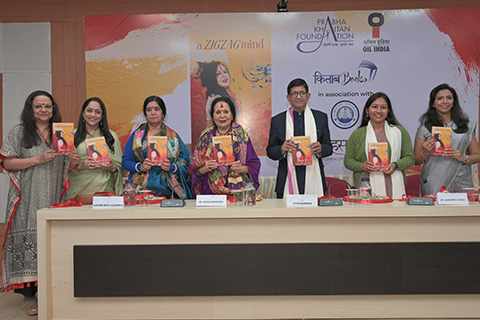
The evening concluded with a heartfelt vote of thanks delivered by Trishna Deorah, Ehsaas Woman of Dibrugarh. Dr. Sonal Mansingh, Lakhipriya Gogoi, Prof. Jiten Hazarika, and Prof. Karabi Deka Hazarika were felicitated with traditional Kantha Dupatta, Assamese Japi, and Gamusa.
This session of Kitaab was organized with the support of Ehsaas Women of Dibrugarh, in association with Dibrugarh University and Oil India Limited