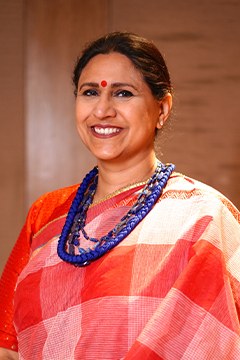
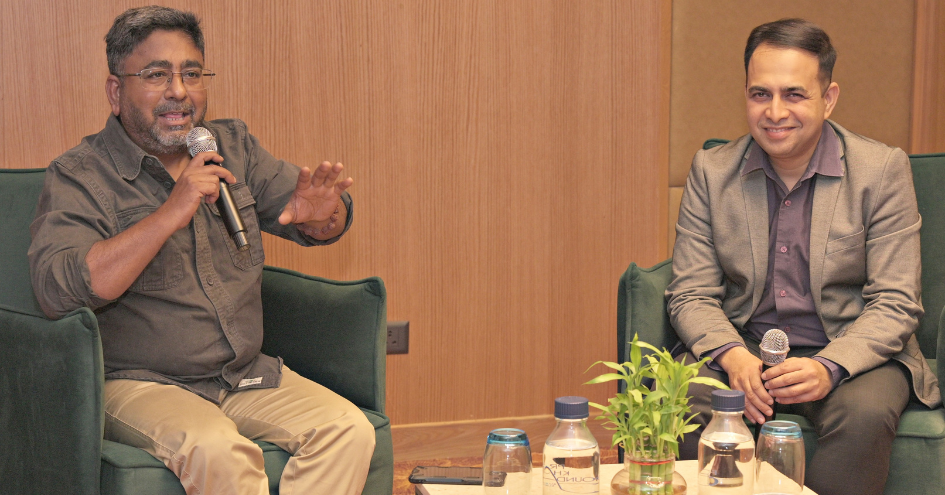
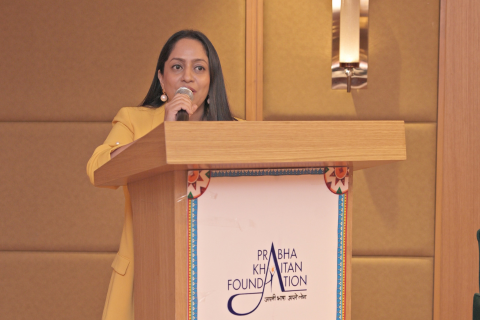
The Dibrugarh edition of The Write Circle, an initiative of the Prabha Khaitan Foundation, unfolded as an evening of intellectual vigour and reflective inquiry, bringing together author, columnist, and public speaker Chandrachur Ghose in a stimulating conversation with academic and author Kaustubh Deka. Preeti Bagrodia, Ehsaas Woman of Dibrugarh, extended a gracious welcome to kickstart the event.
Opening the dialogue, Kaustubh Deka remarked on the richness of Ghose’s intellectual universe. “Your kind of writing universe is very diverse and very fascinating and very rich,” he observed, adding that such breadth made the conversation “delightful as well as challenging.”
Though Ghose began as an environmentalist and later a business strategy analyst, writing was always present. Yet history beckoned with greater urgency in the 1990s when the Government of India set up a commission of inquiry into the disappearance of Netaji Subhas Chandra Bose. “That’s when I got sucked into the whole matter,” he confessed, describing how what began as interest transformed into relentless engagement.
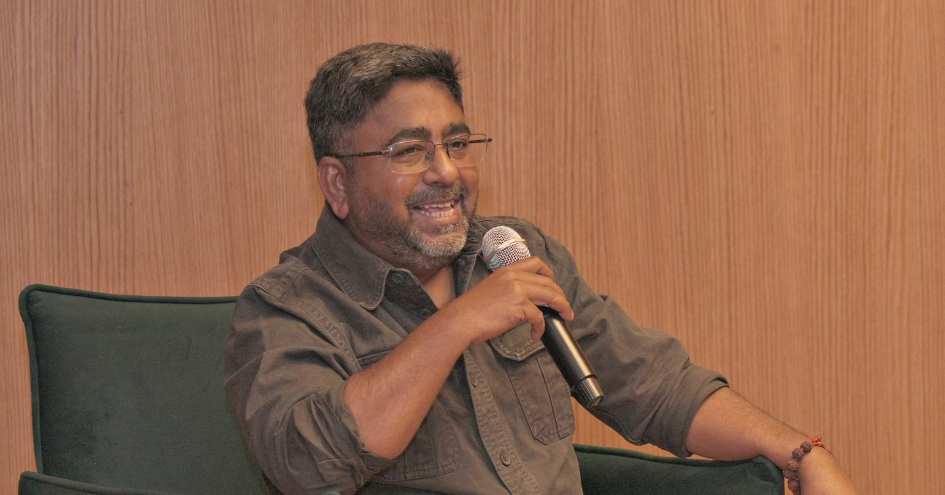
The pivotal moment, however, lay in his confrontation with classified state archives. “For 60 years after independence, so much information had been classified,” he noted. “We would not be able to verify any piece of information or any narrative that was coming out of the government machinery.” It was here that his activism intersected with authorship.
With colleagues, Ghose launched a transparency campaign using the Right to Information Act of 2005. “If there is a law which has been passed to bring transparency in governance, why can’t we use the same law to bring transparency in our history writing?” he asked. The result was historic: over 2,300 files relating to Netaji were declassified, “the only instance in Indian history where private initiative by youngsters who had no political backing could compel the government to make more than 2,000 files public.”
Reflecting on the disparities in published works, Ghose offered a striking statistic: “Mahatma Gandhi’s collected works are about 30,000 pages, Pandit Nehru’s about 10,000, Netaji’s just about 3,000.” For a leader of Bose’s dynamism, this imbalance was troubling. “Subhas was very, very active, Then where have all those gone?” It was a question that propelled his biography and archival searches across libraries, private collections, and forgotten repositories.
The conversation then expanded to his book The Birth of a Republic, a meticulous exploration of the foundational decade of independent India. “Unless we understand 1947 to 1957, we will not be able to understand today’s India,” Ghose asserted. That first decade, he argued, “laid the foundation, the bureaucratic system was stabilised, the armed forces restructured, political ideologies crystallised.”
The discussion ventured into regional intersections during a Q&A session with the audience, including INA movements in the Northeast and speculative encounters between Bose and figures like A.Z. Phizo. Ghose responded grounded in documented evidence. “It is very unlikely that Netaji would have come here, but there were many things which were unthinkable for others.”
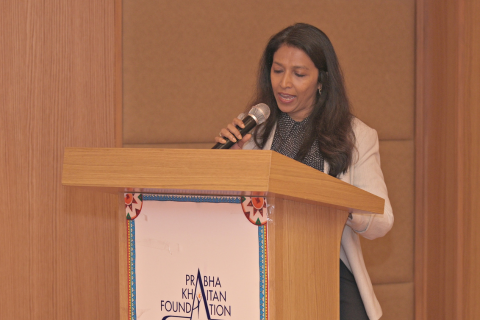
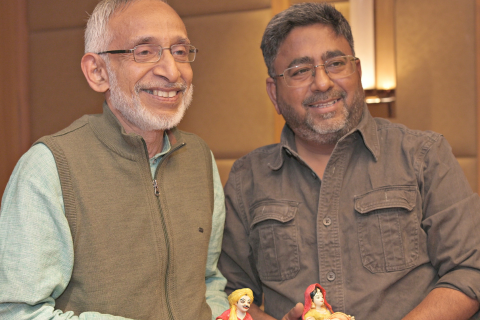
The session concluded with felicitation by Satyanarayan Mundayoor, honouring both the author and the conversationalist. Trishna Deorah, Ehsaas Woman of Dibrugarh, delivered a heartfelt vote of thanks, acknowledging not just the intellectual feast of the evening but the spirit of inquiry it celebrated.
This session of The Write Circle was organized with the support of Ehsaas Women of Dibrugarh, in association with Oil India; Hospitality Partner, Cygnett Inn